


White-tailed Kite
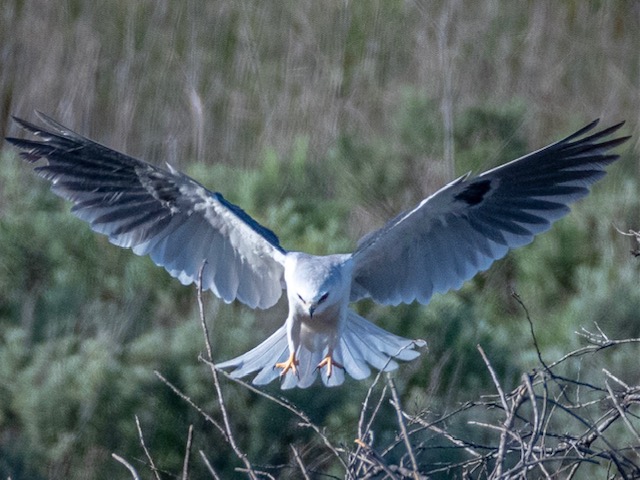
The White-tailed Kite can be seen patrolling and hovering over grasslands, open scrub, and agricultural fields where it hunts small mammals like voles and mice using a unique hunting technique known as “kiting”, where it hovers motionless in the air facing into the wind scanning the ground for movement. Once sighted, it rapidly dives, feet down, wings held up, deftly snatching the unwitting prey.
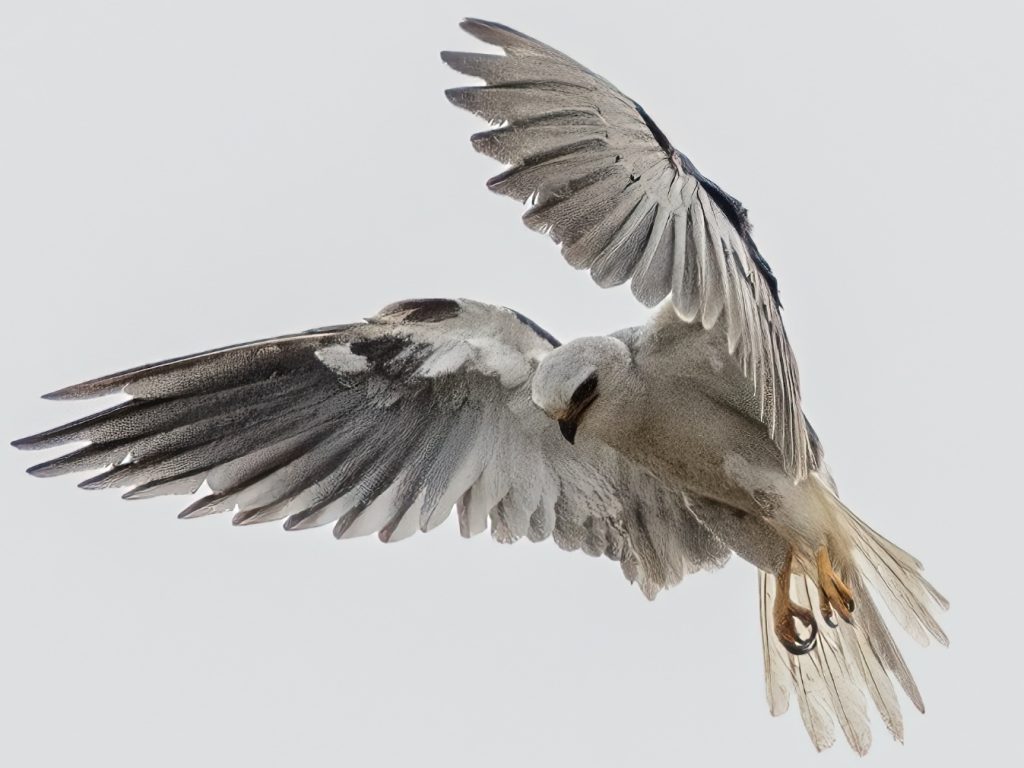
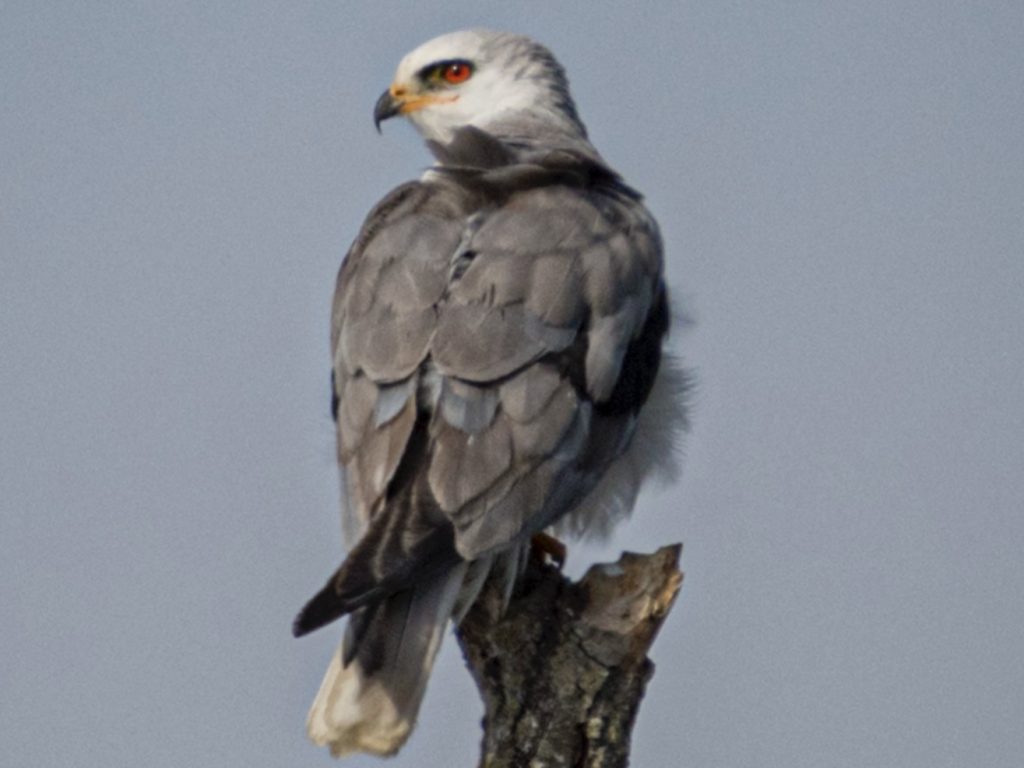
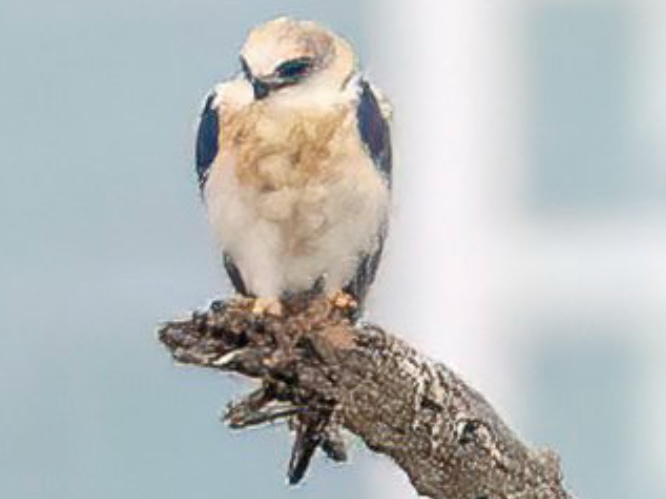
Whereas the coloration of the White-tailed Kite is gull-like, its shape and flight is more like that of a falcon, with a rounded tail. The kite has a white face and underparts, with black wingtips, bill, and shoulders. The adult bird has striking, deep red eyes that stand out at night. An immature kite has a distinctive rusty breast and crown with yellow eyes.
During the 1930s and 1940s, White-tailed Kite populations in California plummeted due to shooting, egg collecting, and habitat loss.
It has made a significant comeback from near extinction in the mid-20th century to becoming a somewhat common sight again in some areas. This was achieved through state and federal legal protection, habitat conservation, and modern agricultural practices that have helped its populations rebound particularly in central California. It is cautiously hoped the improvement will continue despite the ongoing habitat challenges this cherished bird-of-prey faces.
Photos by James Kendall Written by Betty Kanne