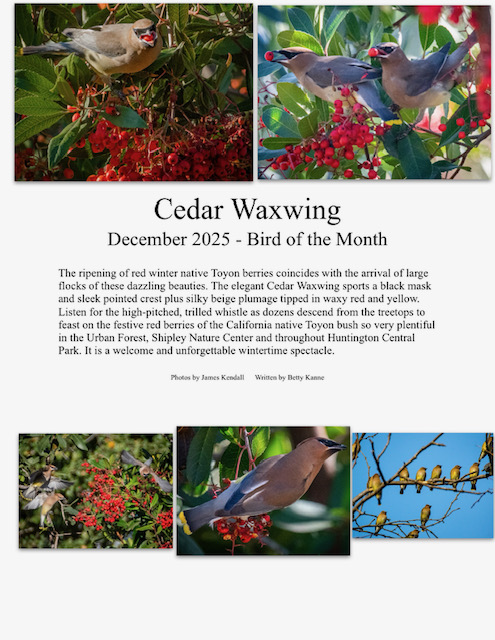


Double-crested Cormorant
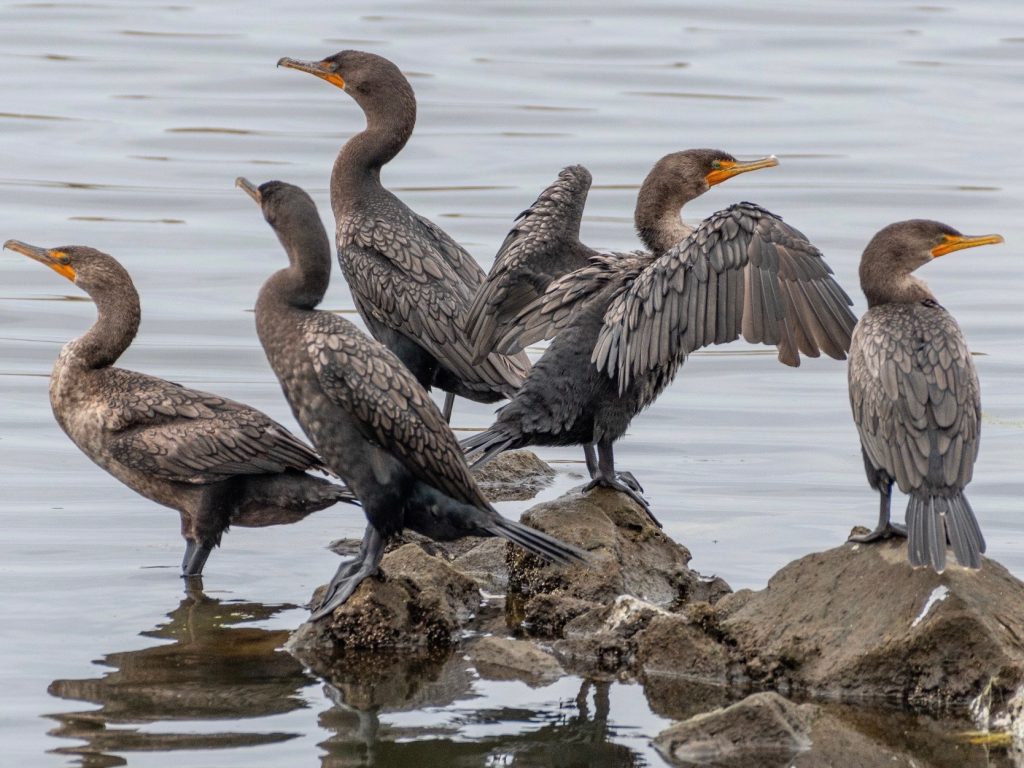
Double-crested Cormorants are a common sight on California’s coast and waterways, often seen flying in a V-formation or swimming with only their necks and heads visible. They are often seen standing with wings spread out to dry, because they have evolved to have feathers that become easily waterlogged, allowing them to dive deeper without air bubbles getting trapped underneath their feathers. This adaptation, along with heavier bones, makes them more agile, faster hunters underwater.
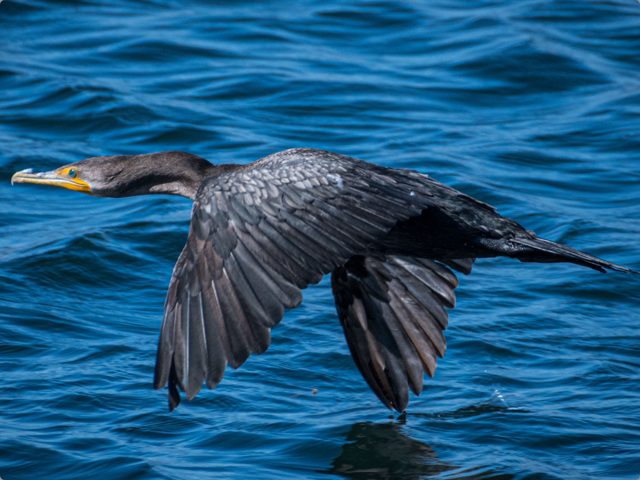
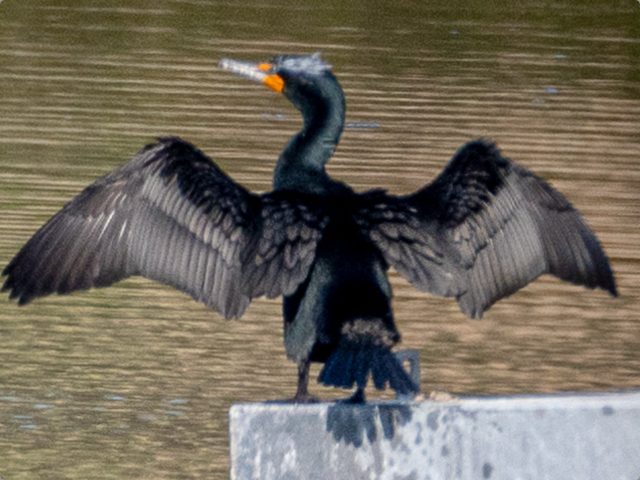
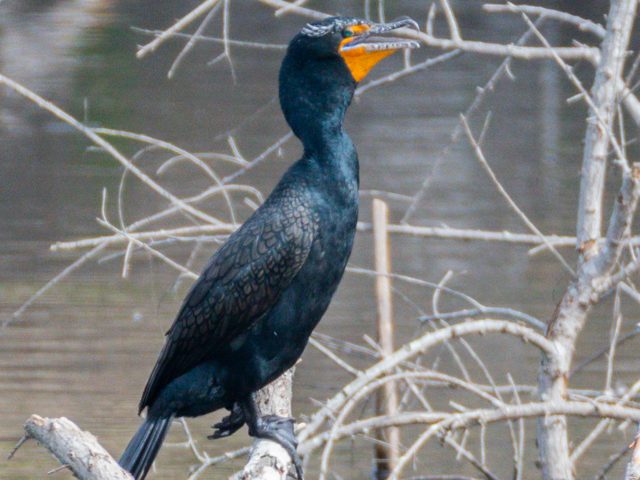
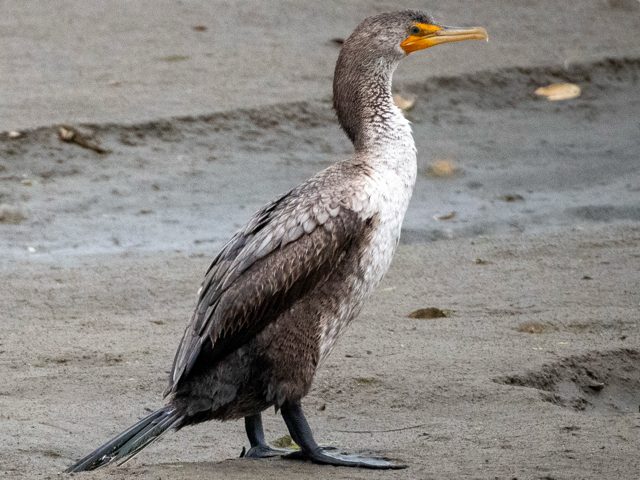
During the high-breeding phase, typically in March, a breeding adult’s eyes turn an intense aquamarine, and their mouth interior turns bright blue. They grow a pair of white and/or black curly “nuptial crests” above their eyes and develop a brilliant orange facial patch. Hence the name Double-crested. The breeding period can span from February through summer. Adults are black, but immature birds can be easily identified because they retain a pale neck and breast until three years of age, when capable of breeding.

Double-crested Cormorants are highly social, often forming large, noisy nesting colonies. There has been a thriving annual nesting colony overlooking Lake Huntington in Huntington Central Park West for more than twenty years. Dozens of clustered stick nests loom thirty to forty feet in the air in towering eucalyptus trees on the southern shore of the large, deep lake where up to eighty adult and immature Double-crested Cormorants feast continually on the trout that inhabit the well-stocked fishing lake.
Dutiful parents can be viewed steadily carrying fish back to noisily begging nestlings stretching out of their bulky stick nests high overhead. Newly hatched chicks make a chirping sound but as they rapidly grow in the nest the sounds become a demanding guttural croak. Nest-tending adults make deeper raspy grunts, comically similar to a pig-like oinking, grunting or even a large bullfrog.
In non-breeding season Double-crested Cormorants can often be seen along the rocky coastal shoreline where they put their deep diving capabilities to good use often diving up to seventy feet for unwitting ocean dwelling fish.
Photos by James Kendall Written by Betty Kanne