
Sundial Clock
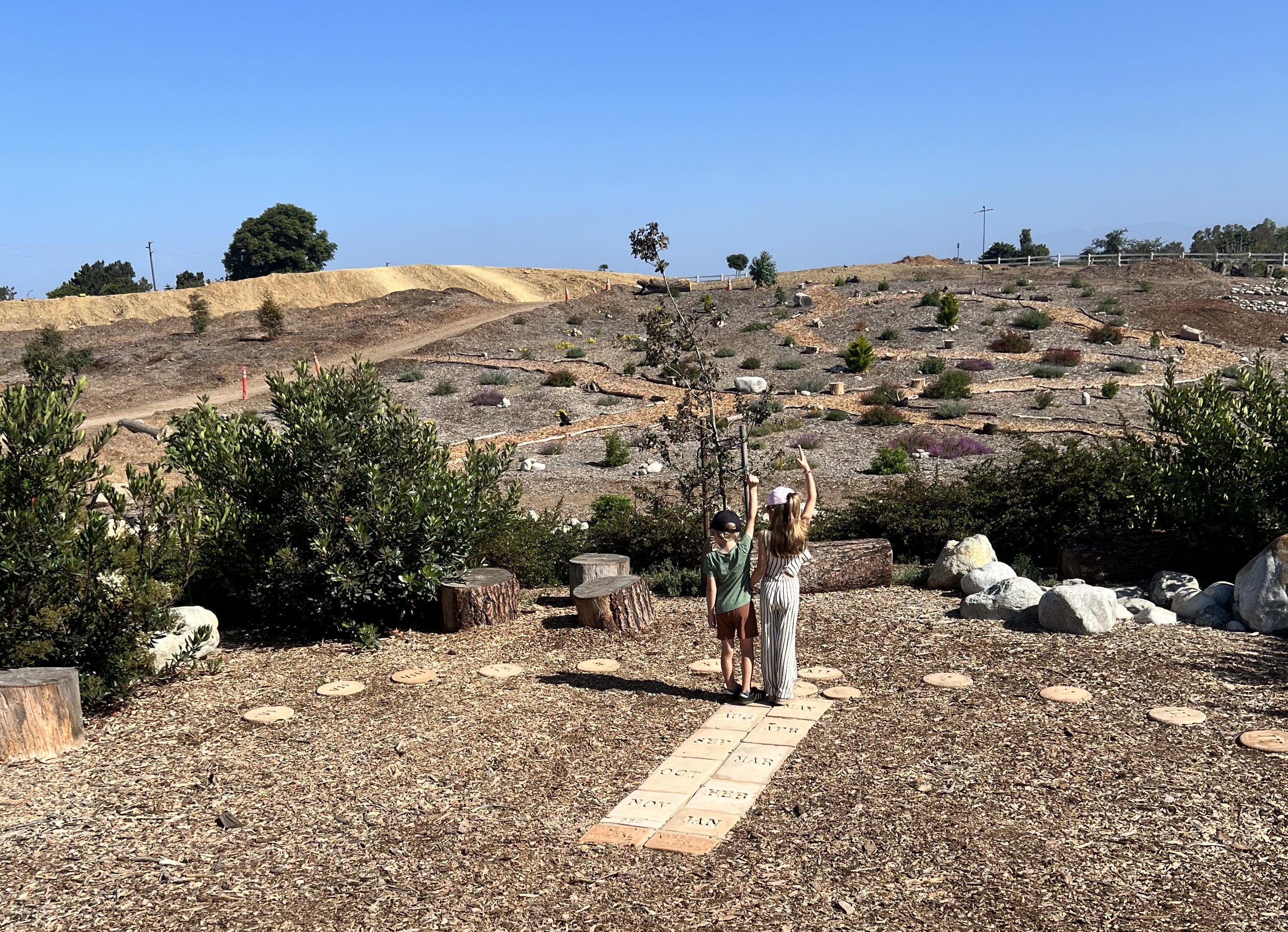
- Stand on the Current Month
- Your Shadow Points to the Time!
This clock shows standard time. It gives true time in winter, but in summer, during daylight savings time, add one hour to the time your shadow shows. For example, if your shadow points to 12:00pm in June, it is actually 1:00pm!
The clock works best in the morning and afternoon when shadows are long.
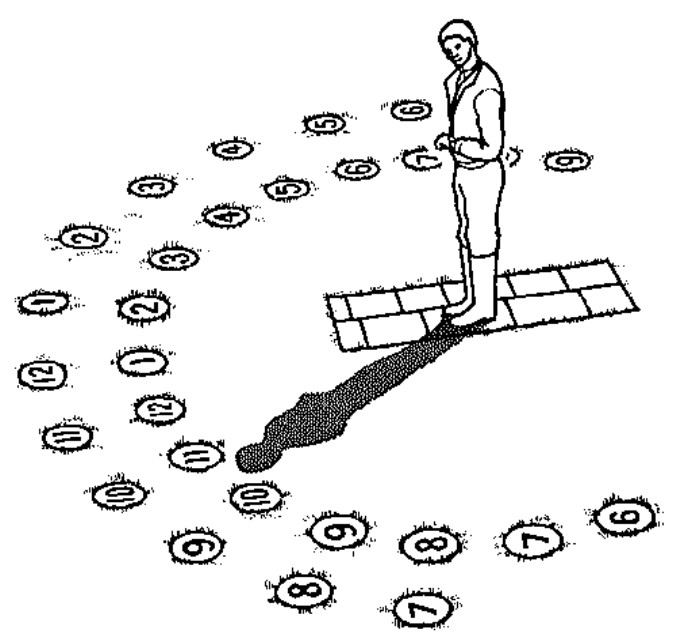
Human Gnomon
A gnomon is the upright piece that casts the shadow on a sundial.
- Which direction is “clockwise”? The first clocks imitated your shadow’s daily motion!
- How would a sun clock work differently if it were built south of the equator?
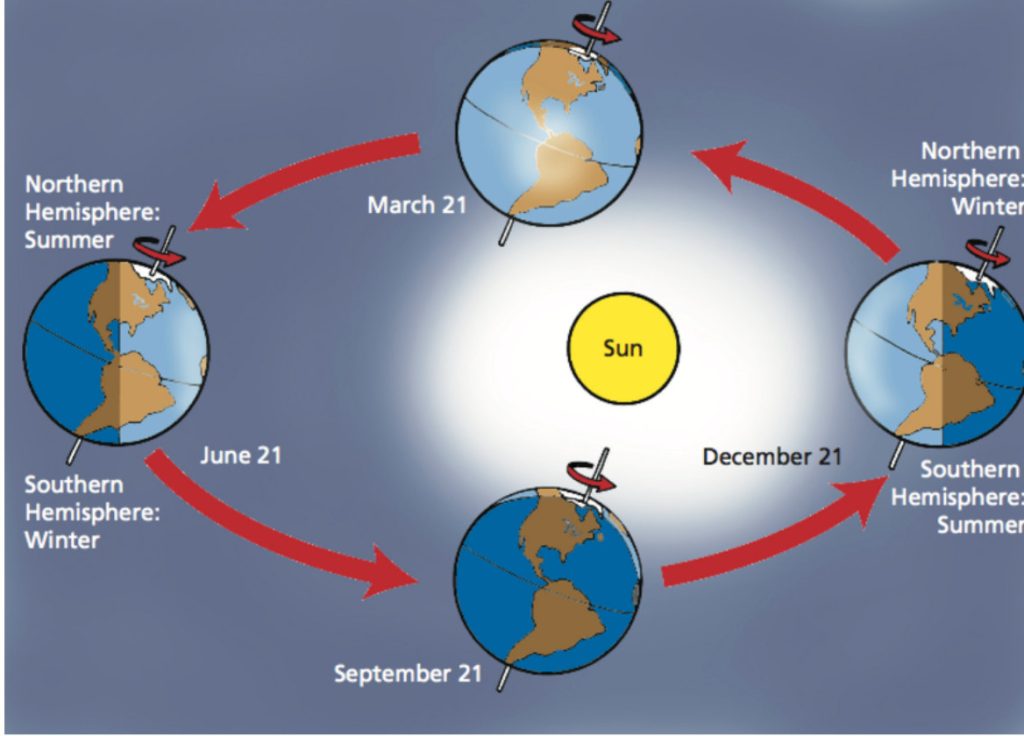
- Why does your shadow direction change each month?
- What’s the difference between true north and the north on your compass (magnetic north)?
The stones were placed carefully for this exact latitude and longitude, but the time you read can be a little off depending on how wide your shadow is and how straight you stand. It’s usually within 15 minutes!

@HBTrees
Technically it is an “analemmatic sundial”. A person stands in the center and their shadow points at numbered stones in the ground. A traditional sundial has a fixed center piece (called a gnomon) that casts the shadow, but in an analemmatic sundial the gnomon moves forward or back with the day of the year. Our Urban Forest sun clock uses a human gnomon. The sun clock is located north of Ellis and east of Edwards, surrounded by three young trees, west along the parth from the volunteer parking lot. That area began reclamation in the winter of 2023 and has bloomed into a wonderful colorful space. The small cul-de-sac formed by the trees was bare and many suggestions were made on how to embellish it when someone suggested a sundial. A little research found many references to human sundials and layout planning was started to create the 20-foot clock. Individual stones were made by pressing wood block letters into concrete as it was drying and the stones were set in place to an accuracy of +/- ¼ inch so the time is accurate to about 15 minutes depending on how straight you stand and the width of your shadow. The clock tells standard time so in the summer months when everyone artificially sets their watches ahead one hour for daylight savings you need to add one hour to the number your shadow is showing.
Did you know “high noon” in the summer is 1 pm Daylight Savings Time? Did you know that the movement of the shadow on early northern hemisphere versions of this type of clock is where ‘clockwise” comes from? If you lived south of the equator it would go the other way!
The Urban Forest Sun Clock is meant to be simple, understated, and blend into the natural beauty of the area. Both its location and function intentionally require some exploring to find and use. If you just can’t find it, search for “Sun Clock” in Google Maps.
We all see the sun rise in the east, set in the west, and move with the seasons tens of thousands of times in our lives but rarely take the time to understand why Take some time to wonder, then take some time to wander!
The Urban Forest is maintained and landscaped by volunteers of the Huntington Beach Tree Society. Check out the rest of HBTrees.org to find out what is going on and how to contribute.
- Which direction is “clockwise” and why?
- Why does your shadow direction change due to the month?
- How does the length of your shadow change throughout the day and year?
- How would a sun clock work differently south of the equator?