


Black-headed Grosbeak
The Black-headed Grosbeak is a large russet-toned songbird with a massive egg-shaped head and a gargantuan triangular bill ideally suited to cracking nuts and seeds. The body is thick, tubular and robust with a fairly short tail for its chunky size.
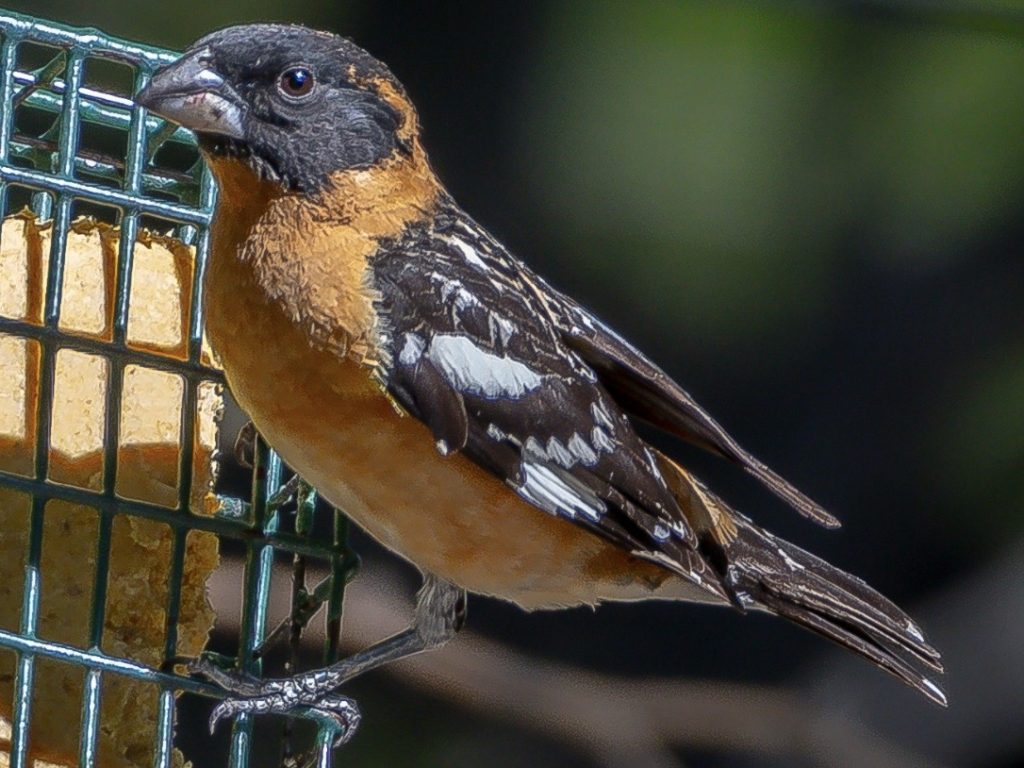
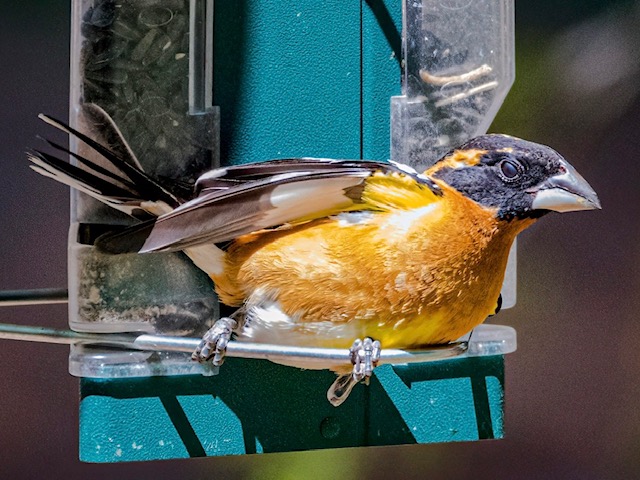
Breeding males have a burnt-orange body, blackened head, wings, and tail with bright slashes of white on the wings. Females and immature males have a boldly striped head pattern, duller brown streaked upper parts with a tawny butterscotch breast.
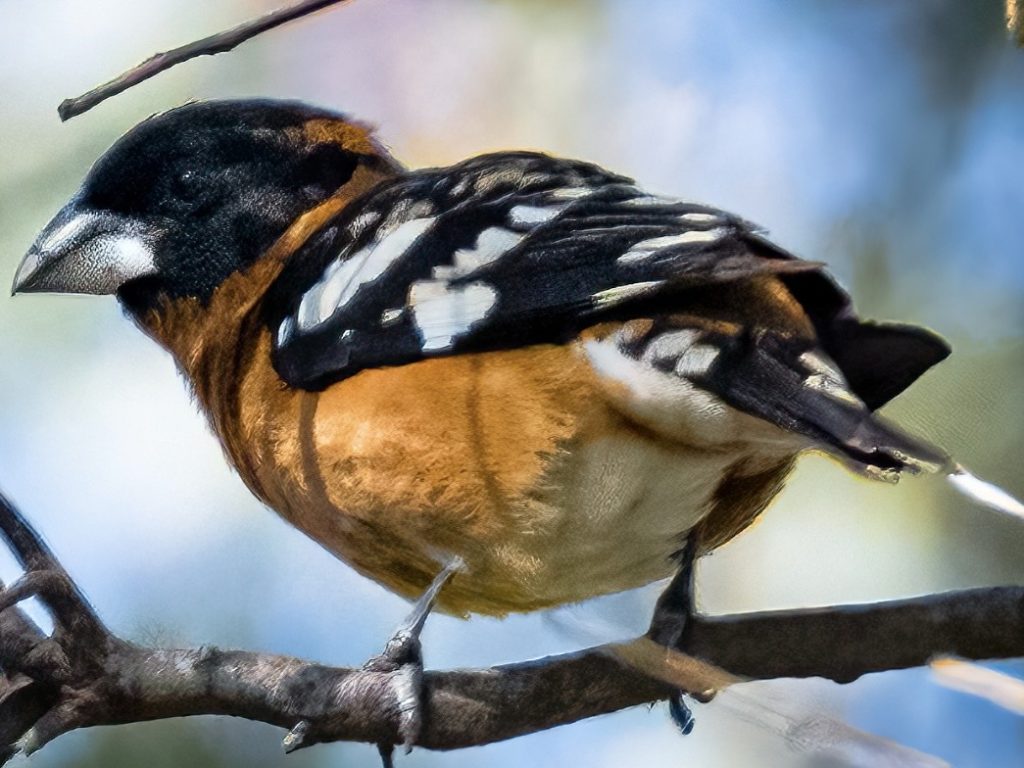
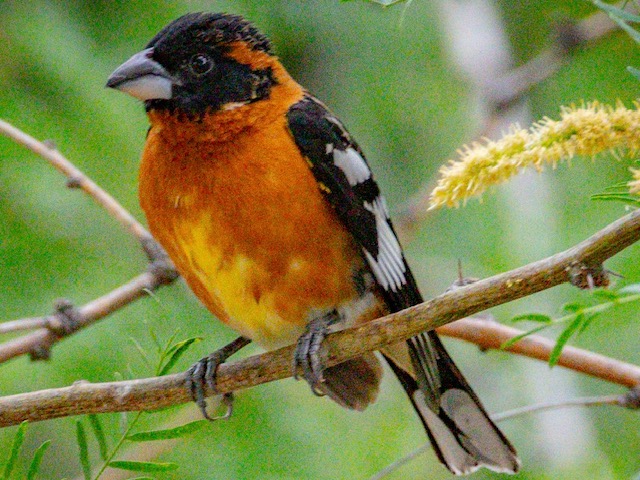
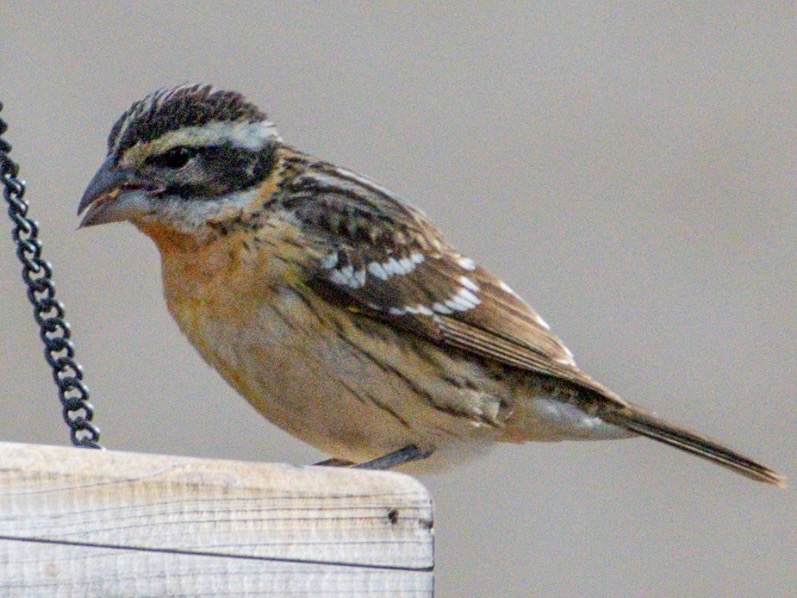
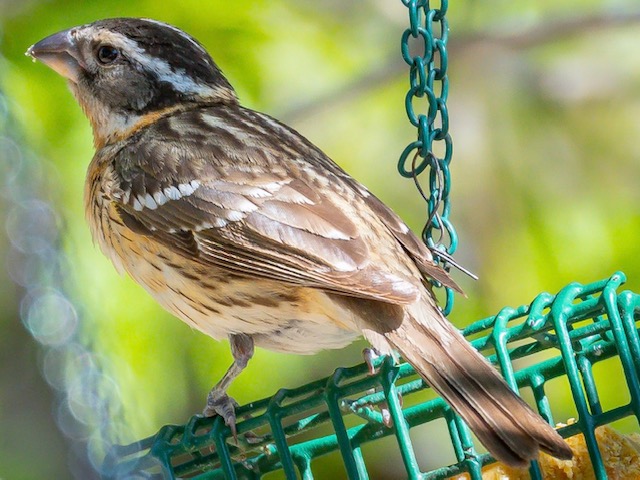
Overwintering in Mexico, they return in May to breed throughout the Western US including Coastal California where they build flat woven nests deep within dense leafy foliage from where both males and females can be heard brightly singing.
Their song is a rich musical warble that is similar to that of the whistled phrases of the American Robin but more fluent, mellow and sweeter with rapidly rising and falling passages.
The Black-headed Grosbeak is famous for its iron stomach! They are one of the only bird species equipped to eat poisonous monarch butterflies. They consume them in roughly eight day cycles, allowing their bodies sufficient time to process the toxins that would prove fatal to other birds. Their remarkably tough stomachs also allow them to digest other toxins found in nature, such as mistletoe and poison oak. Despite their massive seed-cracking beaks, over half of their diet consists of large, hard-shelled insects. You can even find them indulging a sweet tooth at backyard jelly and nectar feeders set out for orioles.
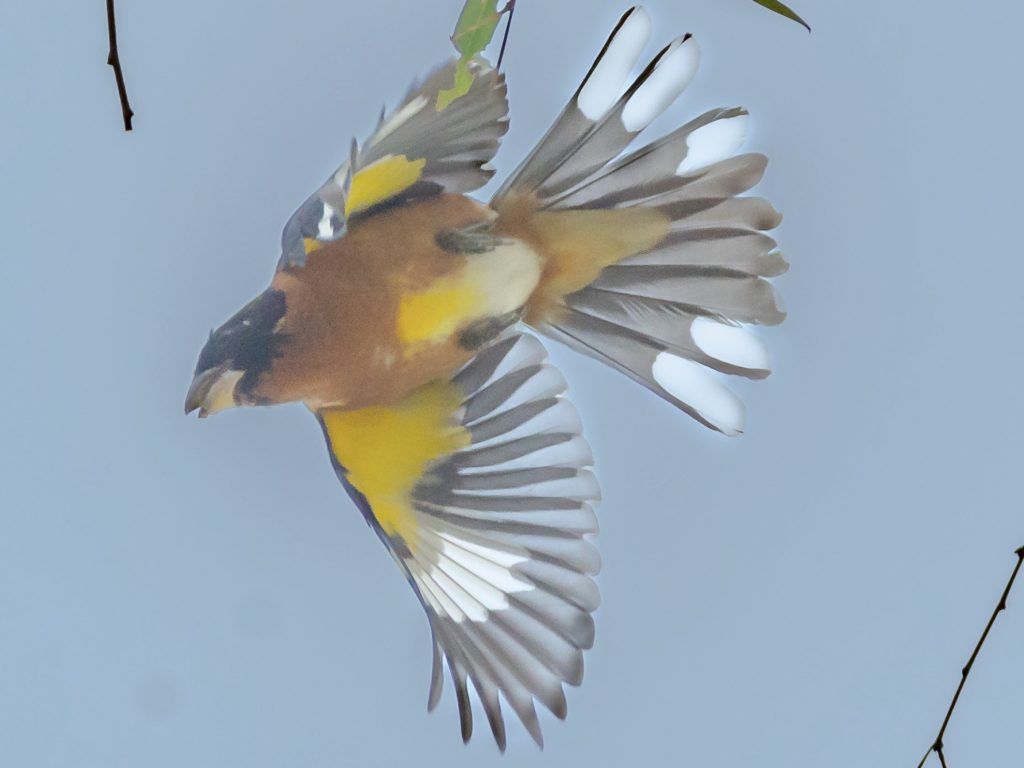
Watch and listen attentively for this striking and peculiar looking, acting, and sounding springtime returning visitor.
Photos by James Kendall Text compiled by Betty Kanne