


Great Egret
The Great Egret is the iconic symbol of the National Audubon Society and the American conservation movement, representing the successful fight against the 19th-century feather trade. Nearly hunted to extinction for their billowing, glossy white breeding feathers used in the fashion millinery trade, their plight spurred major conservation legislation resulting in landmark bird protection laws in the early 20th century that has saved countless animal species from extinction.


The Great Egret is an excellent example of Urban Wildlife success. They have adapted to urban environments, notably nesting in a large annual breeding colony at the Shipley Nature Center. Between April and August they build large, noisy nests high in the treetops for all to see.

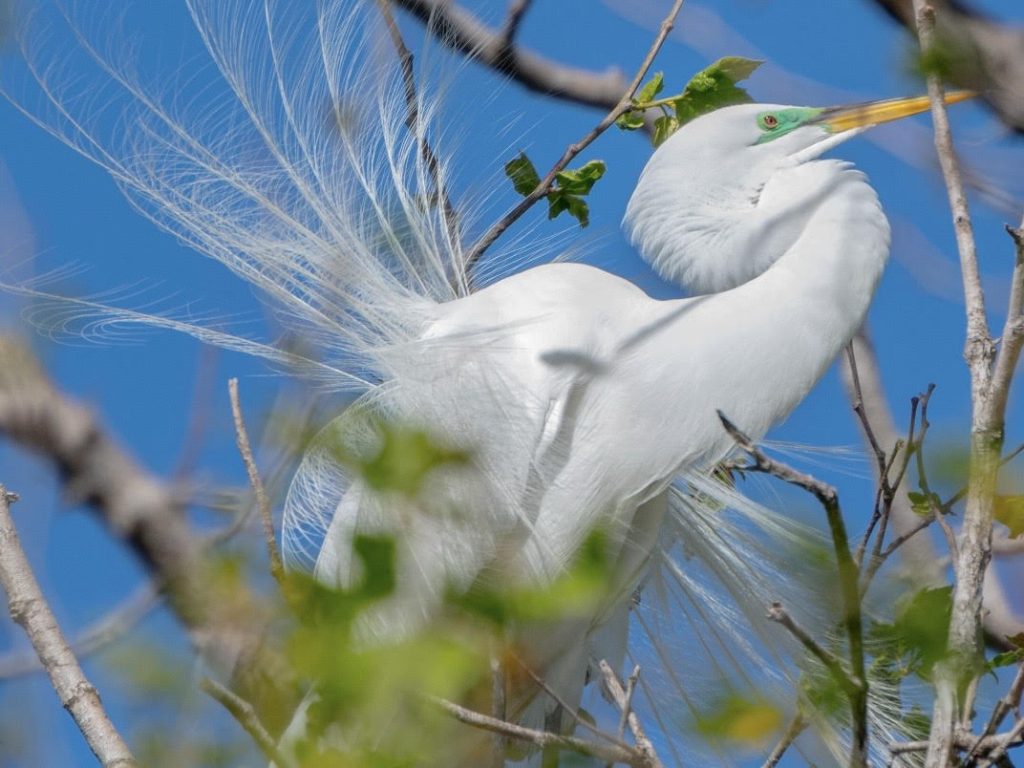
During breeding, Great Egrets display long gorgeous plumes (aegrettes) on their backs and undergo a fascinating facial color change from yellow to neon lime green in the “lores” between the bill and eyes. With these changes adult males and females signal their readiness to breed and to take on the shared responsibilities of nest building, egg incubation and the subsequent feeding of multiple demanding nestlings, spanning a 2-3 month process.

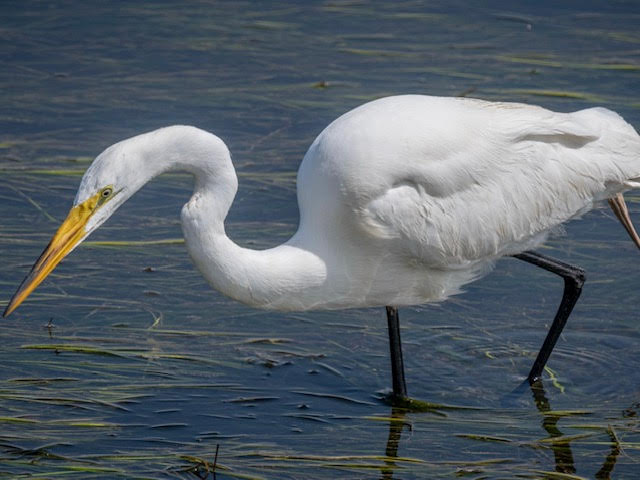
Great Egrets exhibit a remarkable hunting style. They are masters of patience, standing perfectly still in wetlands, marshes, or even lawns to catch fish, frogs, and rodents with a sudden deadly jab of their dagger-like bill.

Photos by James Kendall Written by Betty Kanne