


Pin-tailed Whydah
The Pin-tailed Whydah is a diminutive songbird from Sub-Saharan Africa that has established a strong, growing population locally. The initial few birds likely escaped from the exotic pet trade and soon discovered they could successfully thrive in our mild climate with lush, flowering plants and well watered parks. They are now regularly spotted in residential gardens, parks, and riparian areas across Orange and Los Angeles counties, frequently utilizing backyard feeders. During winter months this drab, brown-striped, seed-eating bird may even go unnoticed.
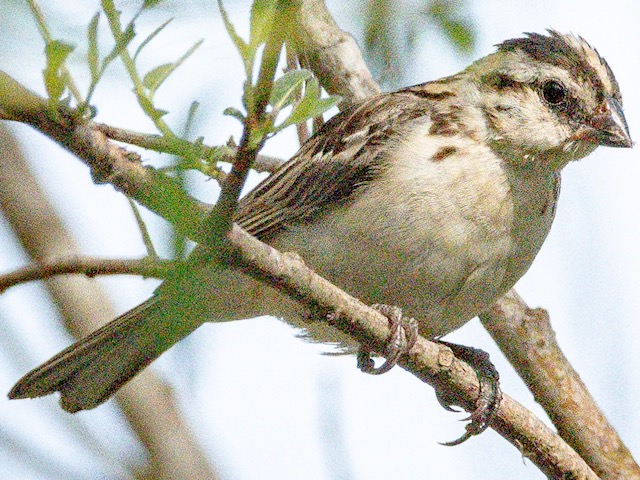

However in the breeding season a remarkable plumage change reveals an astonishing looking bird that had previously gone unnoticed by the average park visitor. Its erstwhile sparrow-like appearance has been utterly transformed.
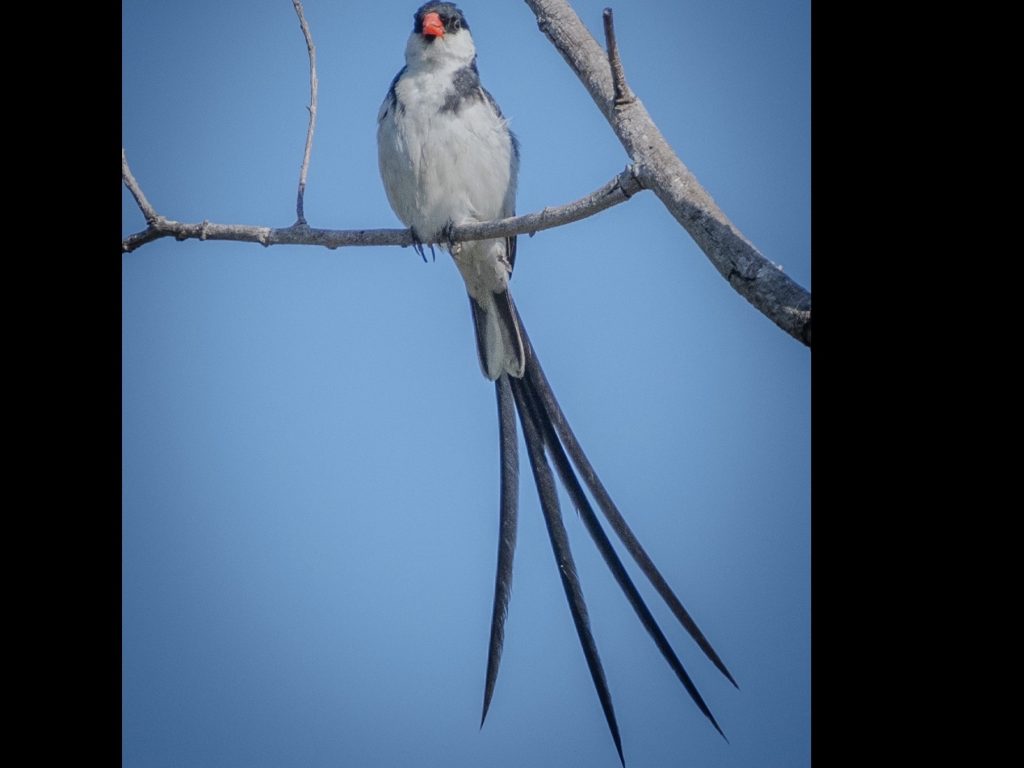
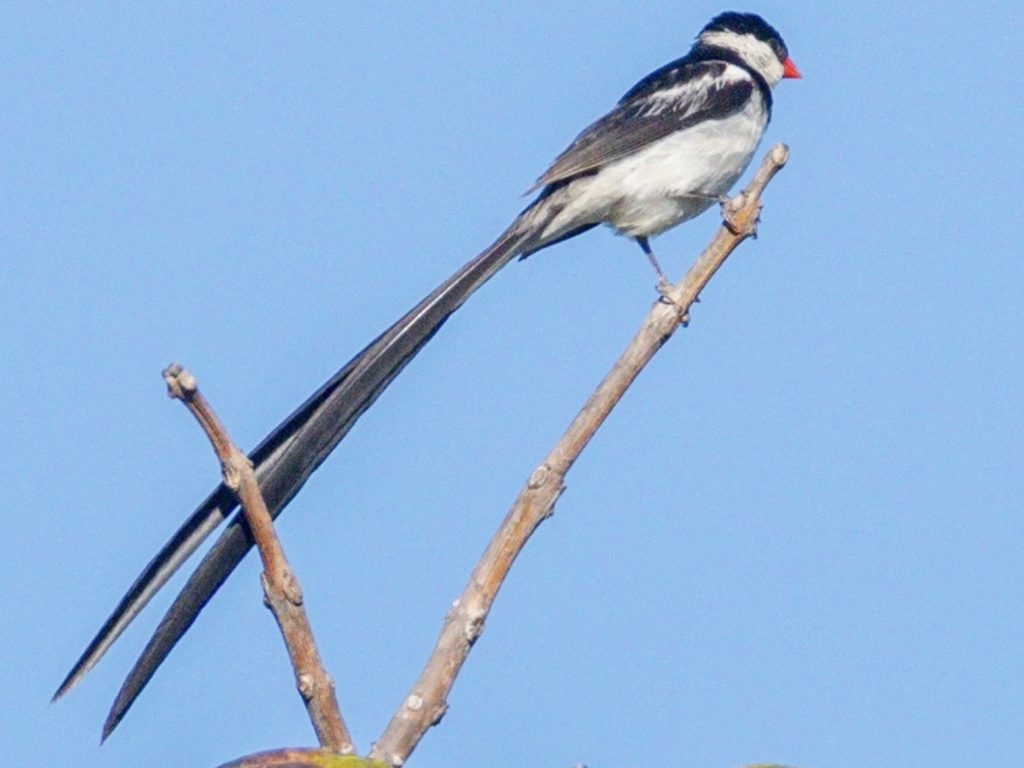
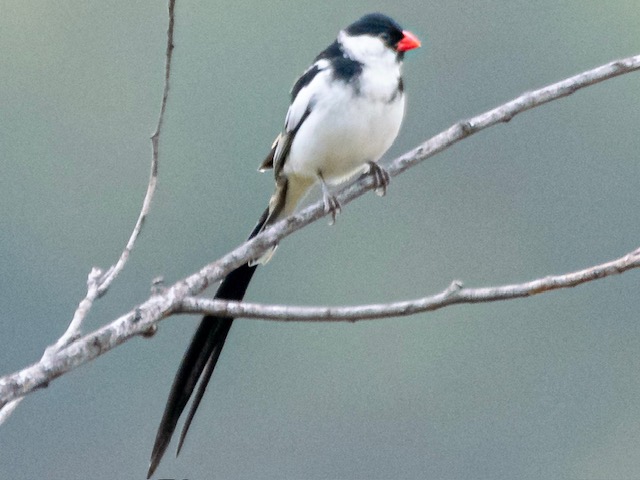
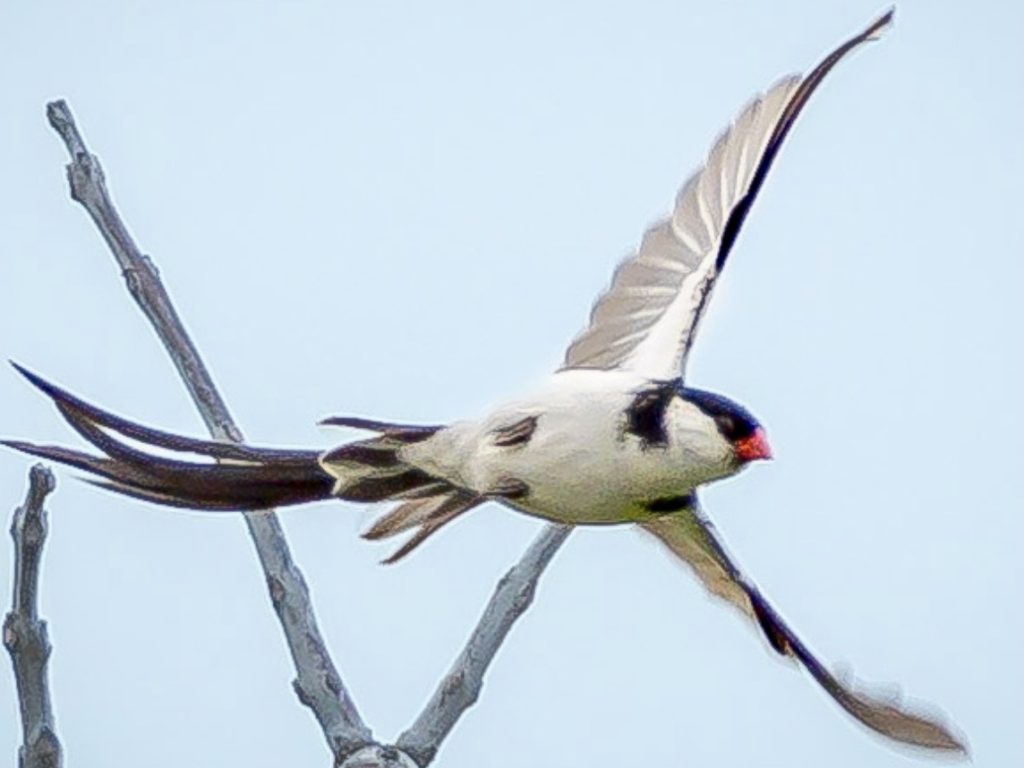
Only during breeding months, an adult male presents with a bright reddish bill, black&white plumage, and a long sweeping tail that can grow up to 12 inches, three times the length of its body. This appearance contrasts markedly with the female’s bold, striped head, streaked chest, and orange-pink bill. His discreet, retiring personality is equally hormonally transformed into that of a bold, assertive, acrobatic performer as he displays his extravagant appearance at every opportunity to dazzle his female counterpart. His buoyant, wave-like aerial courtship maneuvers captivate human observers as much as his intended mate.
Once paired, the female does something every bit as extraordinary as her male counterpart. Instead of building a nest of her own, she discreetly lays her eggs in the nest of another species, leaving the unwitting host to incubate her eggs until hatched. The host parent then diligently feeds and nurtures the adopted nestling to successful fledging. The foreign host is none the wiser and dutifully raises the Pin-tailed Whydah chicks along with its own. This unconventional nesting strategy is called Brood Parasitism and is not exclusive to the Pin-tailed Whydah.
It’s interesting to note that the host species most often targeted for this strategy locally is another non-native bird, the Scaly-breasted Munia. These two tropical species have proven themselves to be viable partners in this arrangement without marked detriment to the host species’ survival. On the contrary, the Scaly-breasted Munia, native to Southeast Asia, is positively flourishing in Coastal California.
Photos by James Kendall Text compiled by Betty Kanne