


Swinhoe’s White-eye
Swinhoe’s White-eye is a newcomer that is rapidly making a big impact. The sprightly, diminutive songbird native to southern China, Vietnam, and Malaysia has recently established a vibrant, burgeoning presence in Southern California since being noticed in Huntington Beach two decades ago.
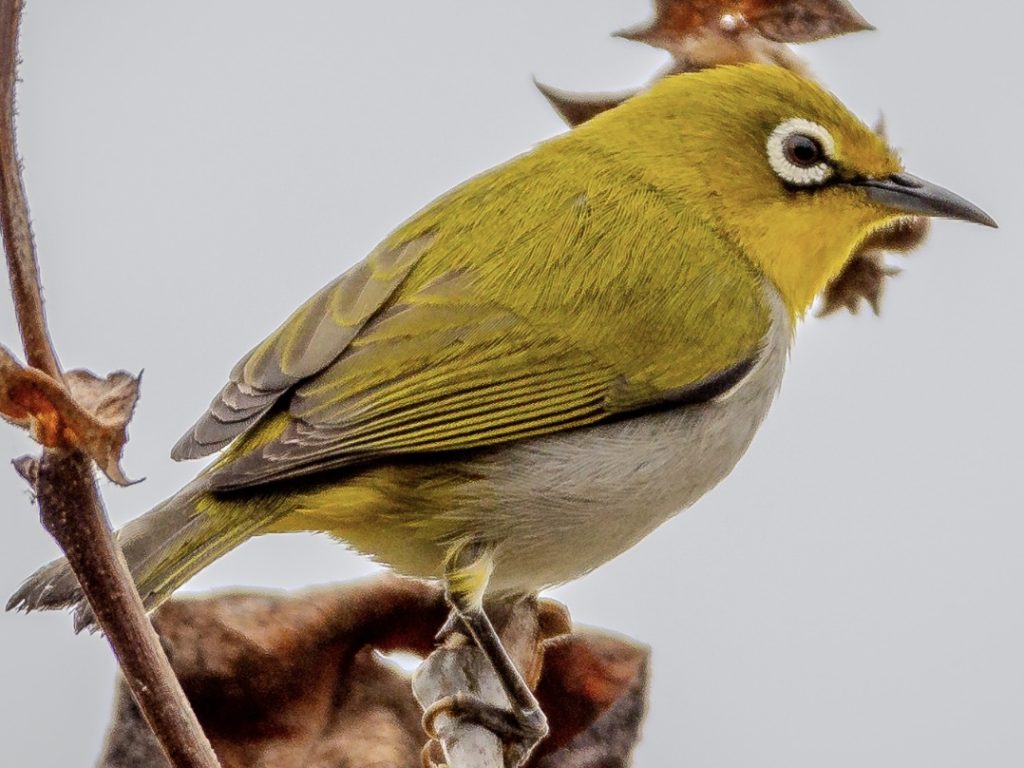
At first there were only a few, likely arriving as a result of the pet trade, possibly as escaped or released birds. Their number grew quickly. Now, they can be found as far south as Baja and as far north as San Luis Obispo. Using tracking software, birders reported seeing more than 100,000 white-eyes in California in 2023, a dramatic jump from the approximately 12,000 sightings in 2018. The explosive growth and expansion is expected to continue. White-eyes have a knack for proliferating. They reproduce quite quickly—up to three times per year, given the right habitat and food sources. Our well-watered green parks and gardens have proven to be ideal homes for these tiny avian acrobats.
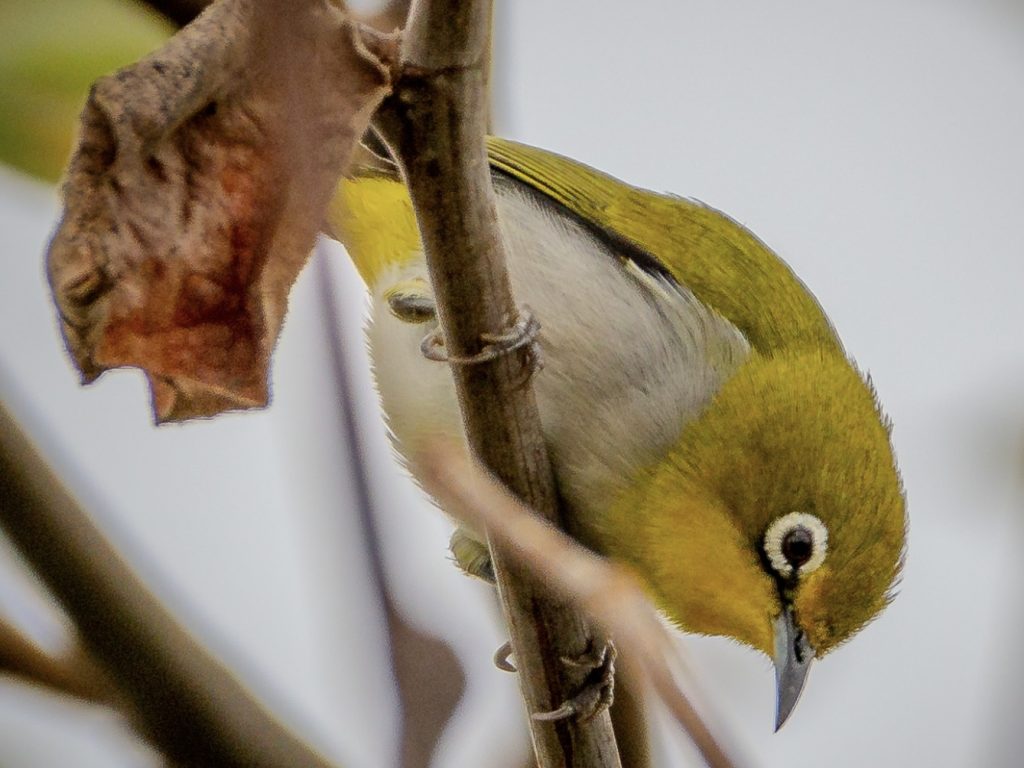
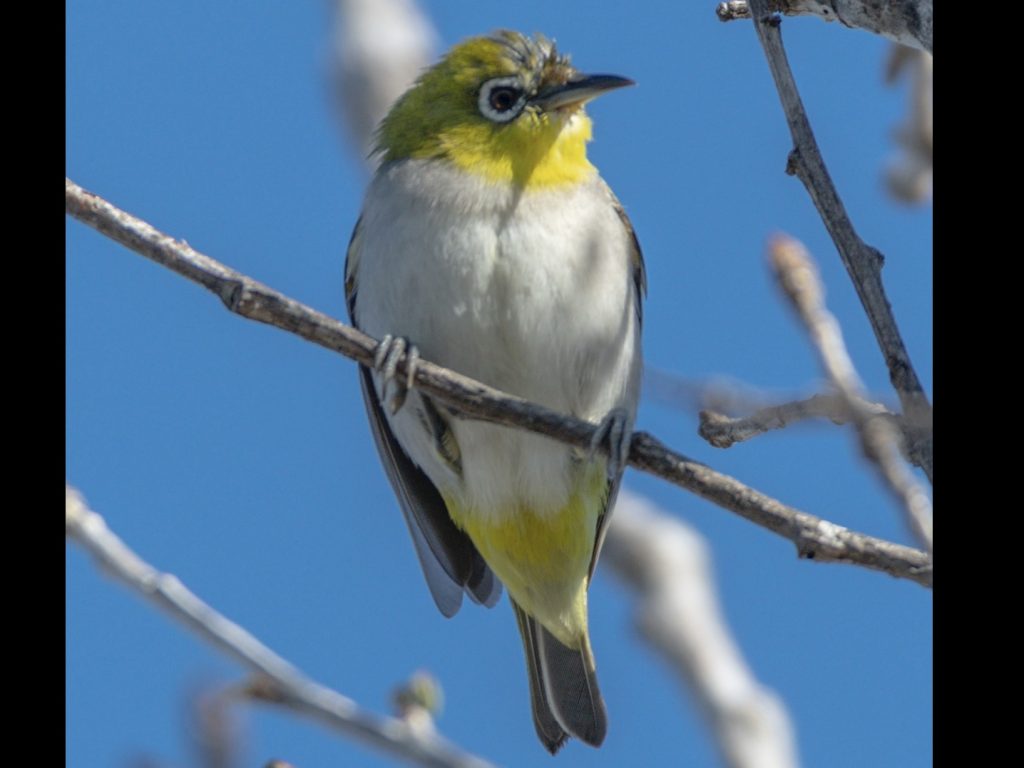

Swinhoe’s White-eye is small and warbler-like with a prominent white eye ring, a lemon-yellow throat, and olive-colored upperparts. Males and females look alike. They are far more often heard than seen. Their distinctive noisy chattering alerts us to their presence as the animated flock forages deep within leafy trees and bushes.
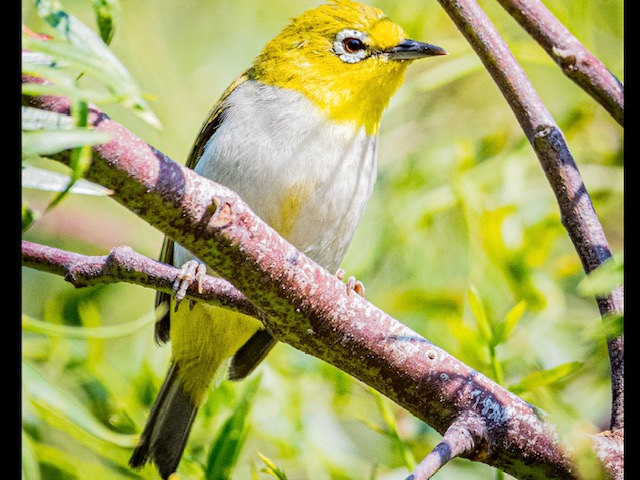
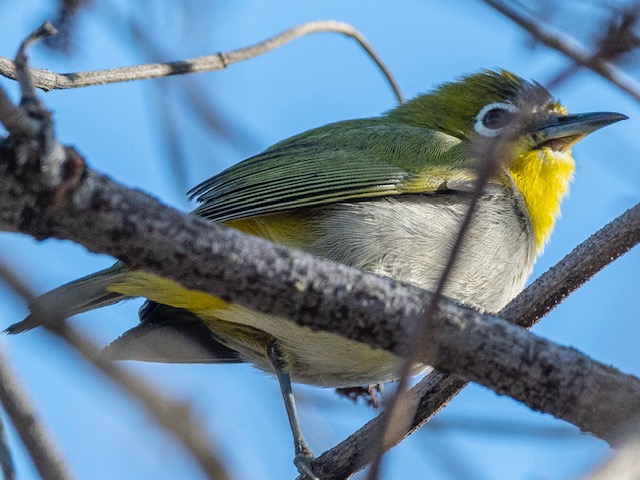
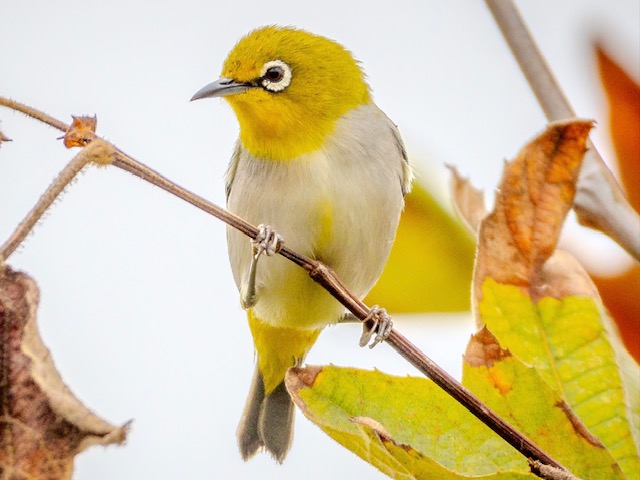
Here in its adopted home, it is an apparent city dweller, most often found in tree-filled urban areas, with verdant parks and perpetually flowering gardens, where it can forage year-round for fruit, insects, and nectar from the understory to the upper canopy of dense bushes and trees. The omnivorous birds travel in noisy groups and have tiny brush-tipped tongues that help lap up nectar from hummingbird feeders and ornamental flowers so often used in landscaping. According to researchers, bird feeders and non-native ornamental plants seem to be a critical resource for the flourishing white-eyes. Quite notably, the species is not yet found in the more arid native southwest habitat of desert scrubland, chaparral or oak woodlands. Researchers are keeping a close-eye on this distinctive white-eye that is now an evident part of our local landscape.

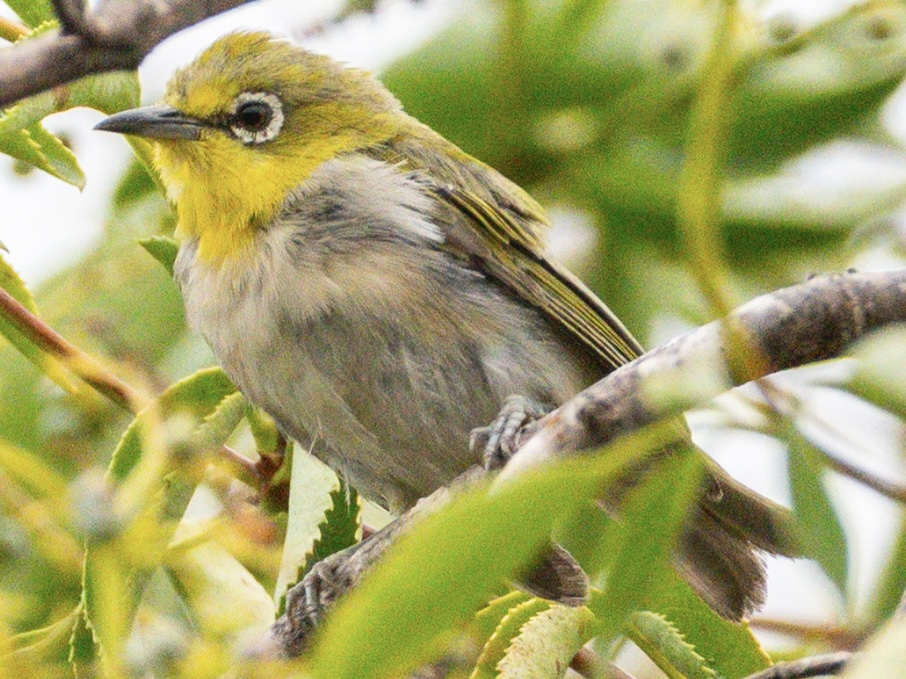
Photos by James Kendall Written by Betty Kanne